What fat rendering actually is
Rendering is the process of applying heat to animal fat so the liquid fat separates from the surrounding tissue — the water, connective proteins, and cell membranes that hold it together. Think pork belly crackling or duck skin. What you’re after isn’t just melted fat: it’s the transformation of that fat structure into something dry and brittle. That’s what crisps up.
The Science of Fat Cell Transformation
When you introduce heat to fatty tissues, a series of precise transformations occur. Initially, the solid fat within the cells begins to melt. As Harold McGee documents in On Food and Cooking, different animal fats have very different temperature thresholds: duck fat melts at ~38°C (100°F), well below cooking temperature, while chicken fat (schmaltz) begins to render at ~130°C (265°F), and pork fat (lard) fully renders at ~188°C (370°F). As the temperature continues to rise, typically above 100°C (212°F), the water content trapped within the fat cells and surrounding tissues starts to evaporate. Crucially, the delicate membranes of the fat cells themselves begin to rupture. This allows the now liquid fat to leach out, leaving behind a shrunken, dehydrated network primarily composed of proteins and collagen. Rendering converts roughly 15–25% of raw fat weight to liquid — the remainder is the rendered-out connective tissue that crisps up.
How rendering produces crispiness
Once the liquid fat drains away, what’s left behind is a protein and collagen matrix. Without fat keeping it soft and moist, that matrix dries out and becomes brittle. As the temperature climbs past 140°C (285°F), Maillard reactions kick in — amino acids and sugars in the remaining tissue react to produce the brown color and savory flavor of crispy bacon, duck skin, or pork crackling. The rendered fat itself helps, acting as a heat transfer medium that promotes even browning across the surface.
Why the air fryer works well for rendering
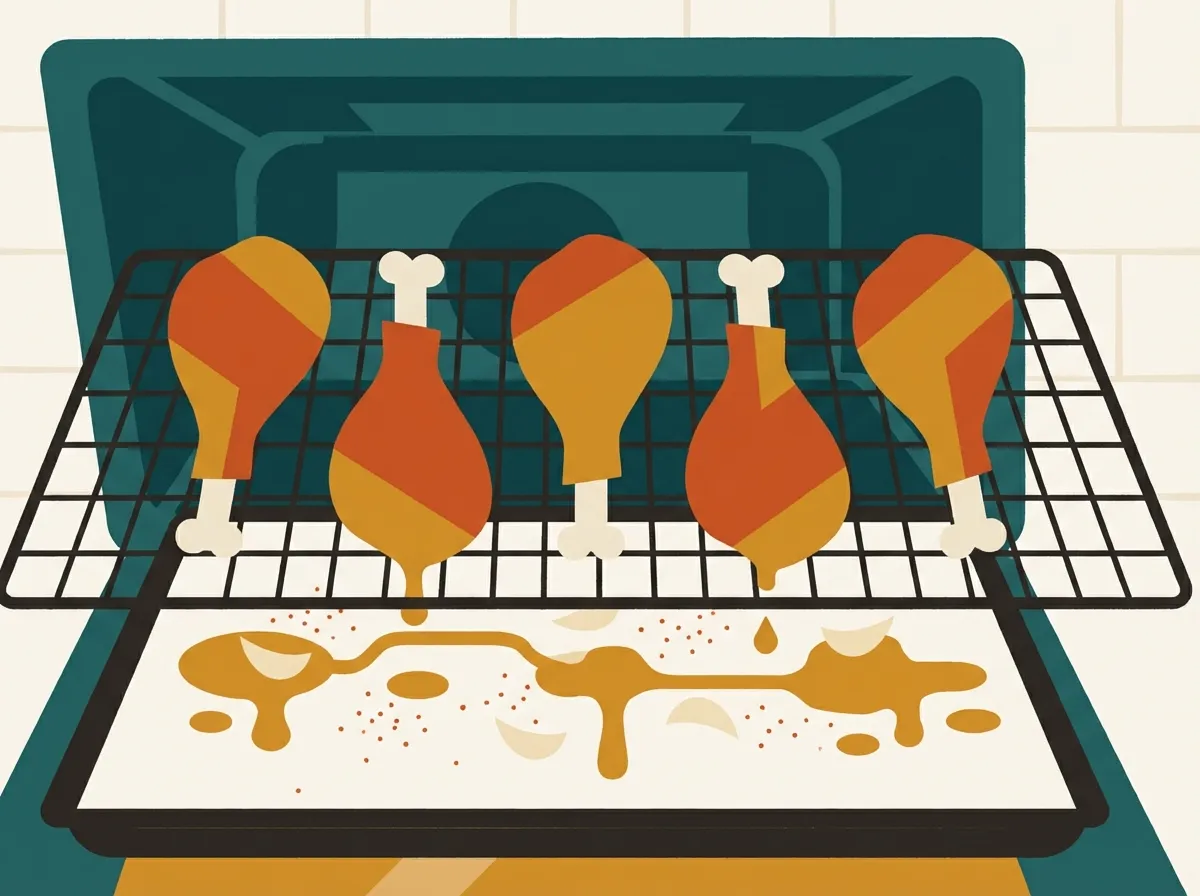
An air fryer handles fat rendering efficiently because it combines rapid airflow with high heat. As fat melts and drips away, the circulating air immediately starts drying the exposed protein matrix, crisping it before the fat can pool and re-baste the surface. For skin-on poultry, duck legs, or pork belly portions, you often get a more consistently crispy result than in a conventional oven — less pooled fat, more direct airflow. For starchy foods like fries, the same mechanism applies: the air evaporates surface moisture fast, letting the starch surface dry and crisp rather than steam.
Sources
- Harold McGee, On Food and Cooking (2004)