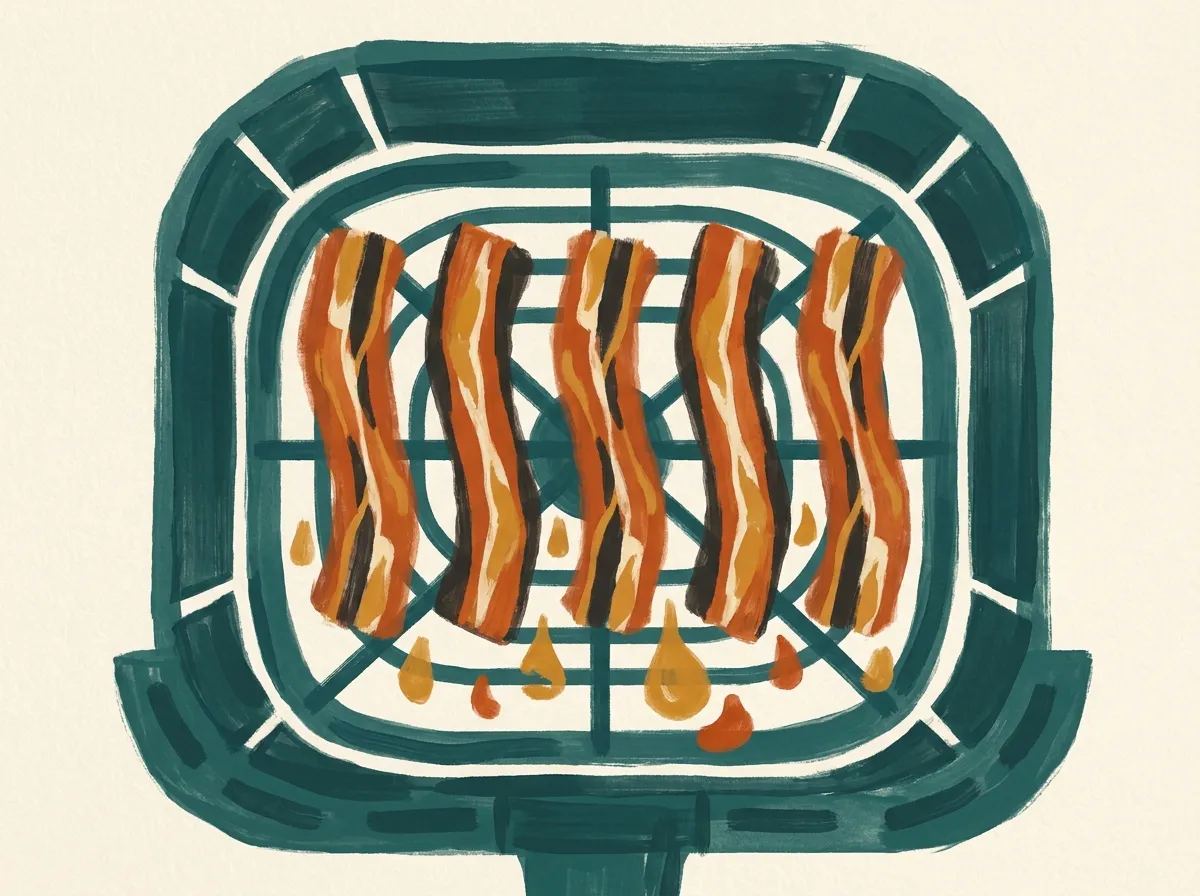
Cook bacon in an air fryer at 200°C / 400°F for 8 to 10 minutes for crisp strips — no preheat needed. Lay strips in a single layer; thick-cut bacon takes 11-13 minutes. Drain accumulated grease at the halfway mark to prevent smoke. Bacon goes from chewy to crispy in the last 2 minutes — pull early if you prefer some chew.
| Size | Time |
|---|---|
| Thin (regular cut) | 6–8 min |
| Standard cut | 8–10 min |
| Thick cut | 11–13 min |
Bacon is done when it's the colour and crispness you like — there's no safety threshold once it's hot through. Chewy: 6-7 min, deep golden but flexible. Crisp: 9-10 min, deep brown and snaps. Burnt: 11+ min for standard cut. Smoke from the basket usually means accumulated grease — drain mid-cook.
Bacon's appeal comes from rendered fat — the salty, golden fat that comes out as it cooks. Air fryer rendering is more efficient than pan frying because the strips aren't sitting in their own grease. The fat drains away through the basket grates, leaving the meat to crisp in dry heat. That's why air-fryer bacon is often crispier and less greasy than pan-fried.
Read the science →No. Bacon goes in cold and renders gradually as the basket heats. Preheating actually risks burning the strips before the fat renders properly. Just lay strips in and start the timer.
Almost always grease pooling at the bottom of the basket and dripping onto the heating element. Drain accumulated grease at the halfway mark, or add a thin layer of water to the bottom drawer to catch drips.
Only if your basket fits the strips in a single layer. Overlapping bacon steams instead of crisping. Most fryers fit 4-6 strips at standard length; cut in half if you need to fit more.
Pour the warm grease from the basket through a fine strainer (catches small bits of meat) into a clean glass jar. Refrigerate up to 6 months. Great for cooking eggs, sautéing greens, or starting a pan sauce.
Cooking times are starting points compiled from authoritative sources and verified against the Renardo Cuisine air fryer testing chart. Your appliance wattage, food thickness, and starting temperature may shift results — always verify protein doneness with an instant-read thermometer.