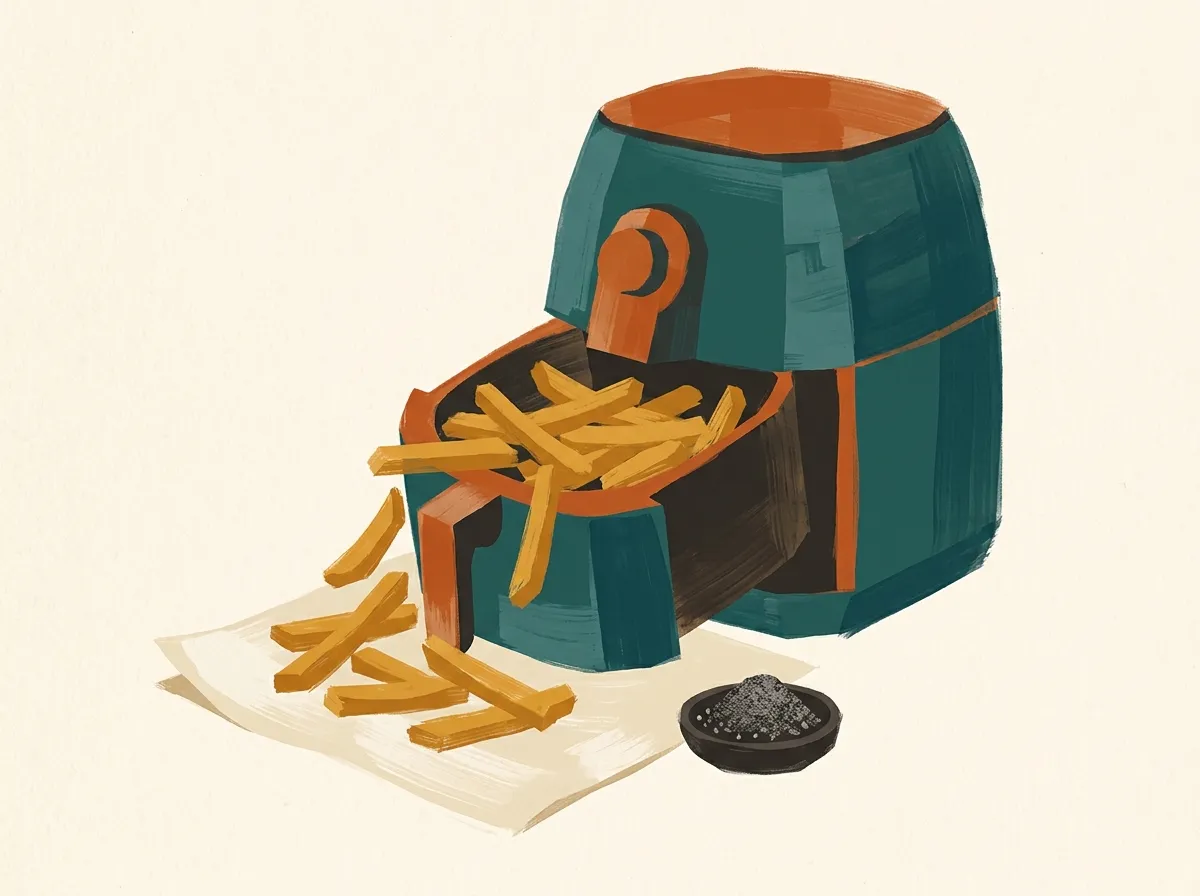
Air-fry frozen fries straight from the bag at 200°C / 400°F for 12 to 15 minutes, shaking the basket every 5 minutes. No oil and no thawing needed — the coating already on the fries is enough. Thicker steak fries need 16 to 20 minutes; shoestrings as little as 8. They're done when deeply golden and crisp at the edges.
| Size | Time |
|---|---|
| Shoestring / matchstick | 8–11 min |
| Standard / regular cut | 12–15 min |
| Thick cut / steak fries | 16–20 min |
| Crinkle cut | 14–17 min |
Deeply golden brown, crisp on the edges, with most fries standing rigid when picked up — they shouldn't bend. If they bend, give them another 2-3 minutes. Pale fries mean undercooked or too cold a basket. Burnt-edged but limp inside means too small a batch in too hot a fryer.
Frozen fries cook well in an air fryer because the ice on the surface flashes to steam and gets pulled away by the rapid air circulation — the inside steams gently from its own moisture while the outside crisps. That's also why they need no extra oil: the surface oil added by the manufacturer is already enough.
Read the science →No. Most frozen fries are already coated with oil before freezing — that's why they crisp up. Adding more oil just makes them greasy and can leave residue in the basket. Cook them dry.
Never. Thawed fries turn limp because their surface moisture has nowhere to go — they steam in the basket instead of crisping. Cook straight from the freezer; that's how they're designed to be cooked.
Almost always crowding. The basket holds far less than you'd think — about half a standard 750g bag is the max for most 5-litre fryers. Cook in batches and shake every 5 minutes.
You can't, really — air-fried fries lose half their crispness within 10 minutes and are limp at 20. Eat immediately. If you must hold them, keep them in a single layer on a wire rack in a 95°C / 200°F oven; never pile them on a plate.
Cooking times are starting points compiled from authoritative sources and verified against the Renardo Cuisine air fryer testing chart. Your appliance wattage, food thickness, and starting temperature may shift results — always verify protein doneness with an instant-read thermometer.