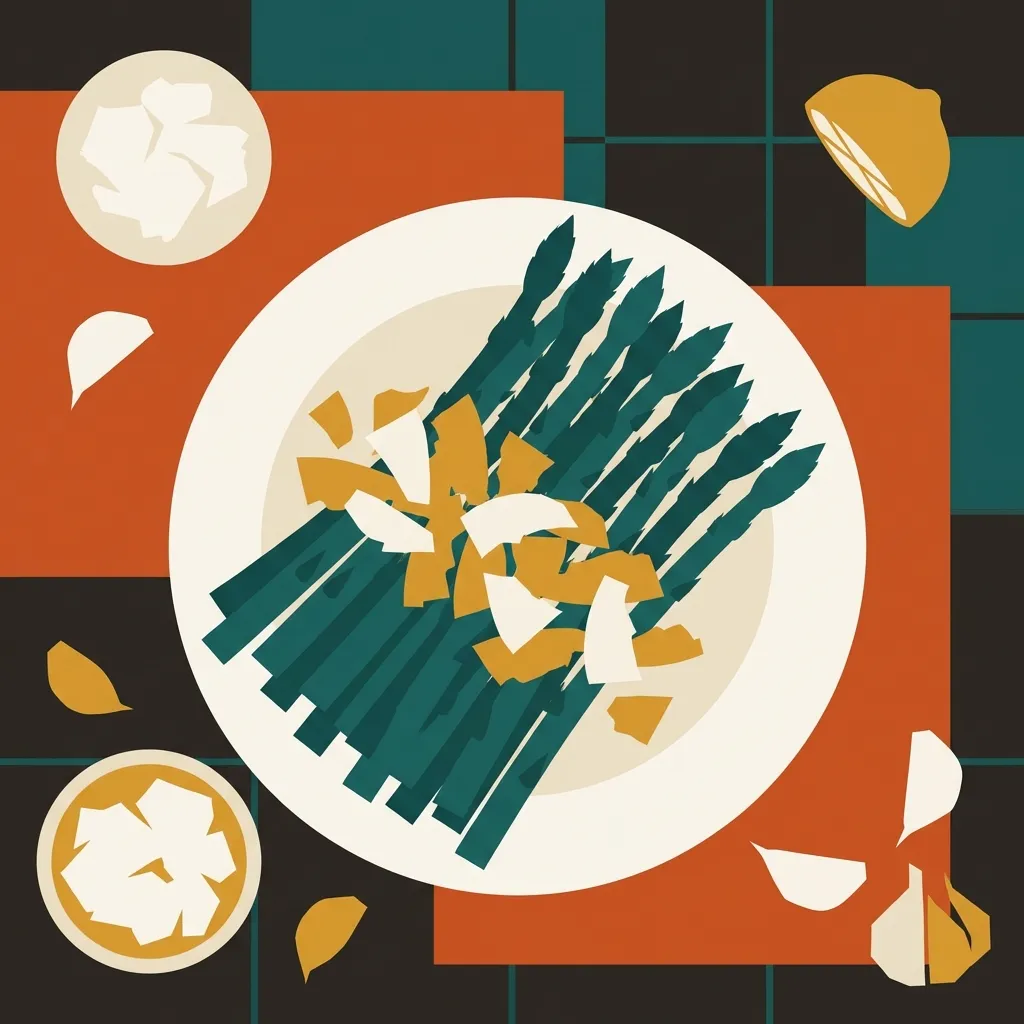
Trim the woody ends, toss spears with oil and salt, then air-fry at 200°C / 400°F for 8 to 10 minutes — no shake, no flip needed for asparagus. Pencil-thin spears do 6-8 minutes; thick stalks 10-13. Done when tips are slightly crisp and a paring knife slides into the stalk easily. Finish with lemon and grated cheese for a 10-minute side dish.
| Size | Time |
|---|---|
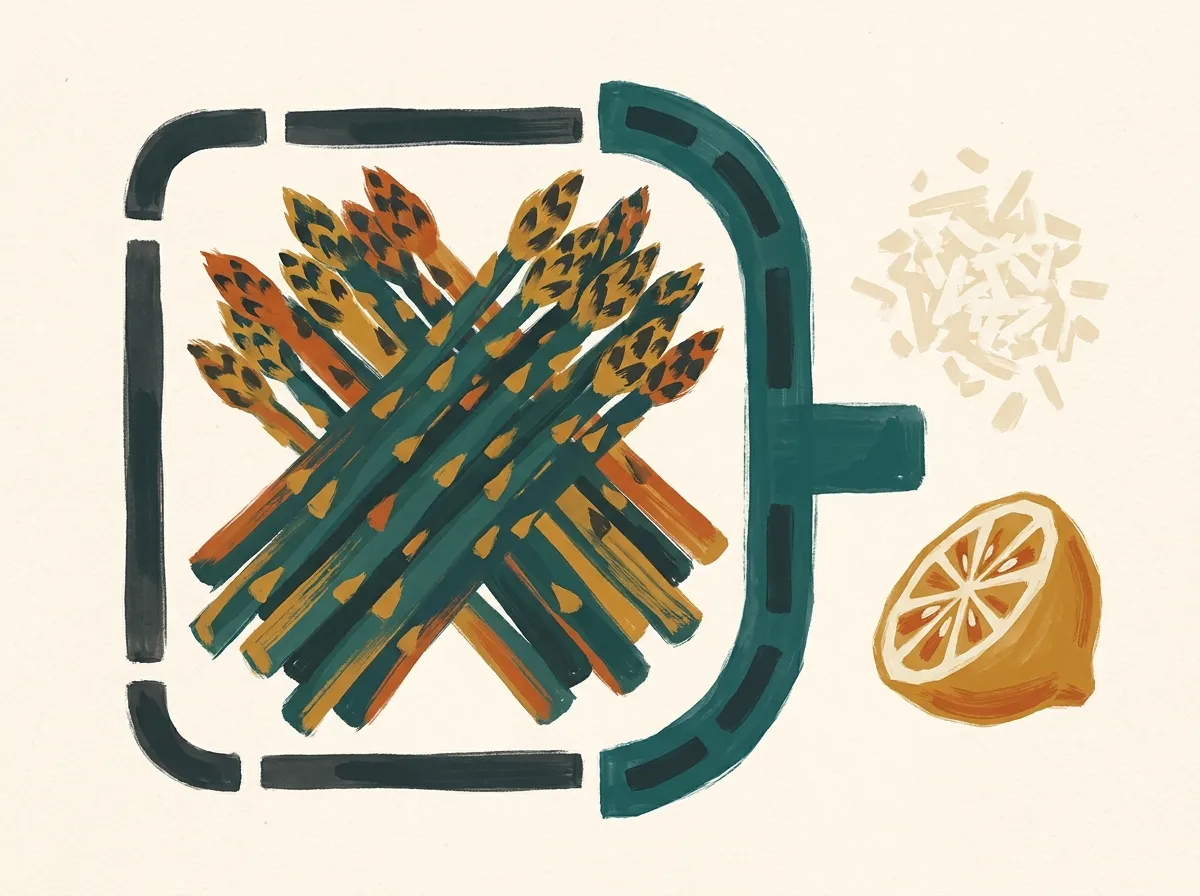
| Pencil-thin (under 1cm) | 6–8 min |
| Standard (1-1.5cm) | 8–10 min |
| Thick (1.5cm+) | 10–13 min |
Tips should be crisp and slightly browned. Stalks should bend slightly under their own weight when picked up — limp means overcooked, rigid means undercooked. A paring knife slides into the thickest part with no resistance. Bright green colour darkens to olive when cooked through.
Asparagus has a narrow window between underdone (woody, hard to bite) and overdone (limp, sulfurous). The compounds that make asparagus taste vegetal — methanethiol and others — break down at high heat for a sweeter, nuttier flavour. Air fryer's fast cooking captures that sweet spot better than slow methods like roasting at lower temperatures.
Read the science →No. Spears are too thin to need flipping; air circulation cooks both sides. The only motion needed is none — set the timer and check at 8 minutes.
Bend each spear gently — it'll snap where the tender part meets the woody base. Or, line up the spears and cut off the bottom inch with a knife. The bottom is fibrous and unpleasant; don't skip this step.
Possible but not recommended — frozen asparagus releases too much water and ends up limp. Stick with fresh, which is at its peak from late March through early June in North America.
Either overcooked (cut 2 minutes off the time) or too much oil (use just enough to coat). Asparagus is delicate and needs precision — overcook by 2 minutes and the structure collapses.
Cooking times are starting points compiled from authoritative sources and verified against the Renardo Cuisine air fryer testing chart. Your appliance wattage, food thickness, and starting temperature may shift results — always verify protein doneness with an instant-read thermometer.