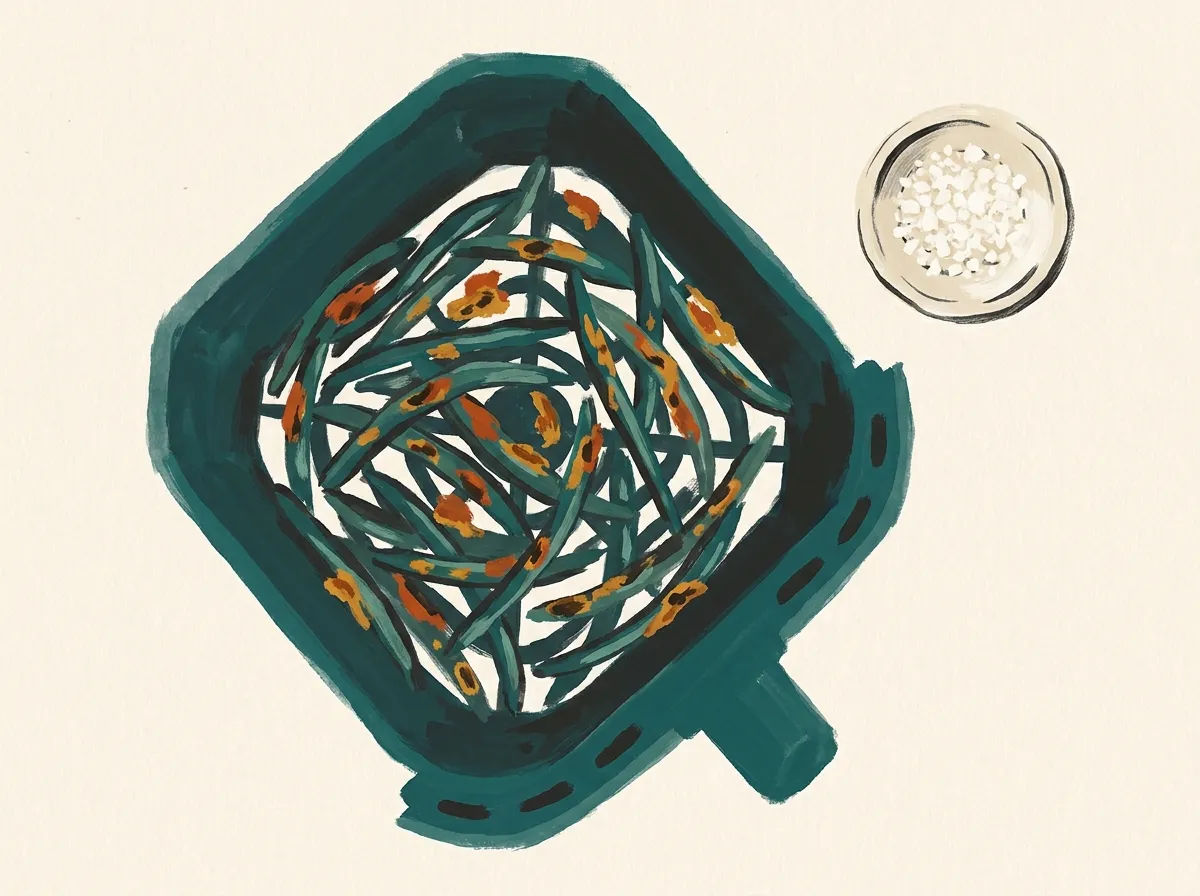
Trim green beans, toss with oil and salt, then air-fry at 200°C / 400°F for 8 to 10 minutes, shaking halfway. The skins blister and char in spots, giving them a smoky, almost charred-vegetable taste. Long beans (haricots verts) take 6-8 minutes; thick American-style beans 10-12. Frozen beans work — add 4 minutes.
| Size | Time |
|---|---|
| Long thin (haricots verts, 4-5mm) | 6–8 min |
| Standard (5-7mm) | 8–10 min |
| Thick (8mm+) | 10–12 min |
| From frozen | 12–14 min |
Cook frozen green beans at 200°C / 400°F. Spread frozen in basket, no thaw. Skip oil at the start; toss with oil and salt at the halfway shake.
Green beans should still be bright green (not olive or grey) with blistered, charred patches on the skin. They should snap, not bend, when you pick one up. Pale beans mean undercooked or basket too cold. Olive-coloured, limp beans mean overcooked.
Green beans hold their colour better in dry-heat cooking like air-frying than in wet methods like boiling. Boiling extracts chlorophyll and makes them go olive; high-dry heat preserves the bright green while charring the surface. The blistered skin patches are concentrated flavour — water inside the bean turns to steam, lifting the skin and giving direct heat access to the surface.
Read the science →No. The air fryer's high heat blisters the beans without needing pre-cooking. Parboiling adds water that prevents the char that gives them their flavour.
Yes. Spread them frozen in the basket, cook at 200°C / 400°F for 12-14 minutes. They'll release a lot of water in the first 4 minutes — shake then to redistribute and add oil and salt.
Either too much water before cooking (pat dry thoroughly after washing) or too crowded. Both cause steam buildup. Spread in a single layer with space, no wet beans.
Just the stem end — that's the woody part. The tail end (the curly tip) is tender and edible. Trimming both is purely aesthetic and unnecessary.
Cooking times are starting points compiled from authoritative sources and verified against the Renardo Cuisine air fryer testing chart. Your appliance wattage, food thickness, and starting temperature may shift results — always verify protein doneness with an instant-read thermometer.